
Arkansas VINELink Coverage for Dallas County
Arkansas runs VINE through the Arkansas Crime Information Center. It is the state's victim information and notification service. County jails feed it bookings. The Arkansas Division of Correction feeds it prison data. Probation, parole, and post-release supervision records flow in too. Prosecuting attorneys supply court information, so hearing dates can generate notices as well. Dallas County jail records travel the county channel. ADC inmates follow the prison channel. Timing differs between them: county-jail data moves to VINE every 15 minutes around the clock, ADC data transfers hourly, and court or supervision data transfers once a day. Those schedules describe data flow, not how fast a brand-new arrest becomes visible. The official online entry point is the Arkansas VINELink page.

VINELink updates its screens from time to time. Menu labels and registration choices may shift. Trust the wording shown in the current Arkansas interface. That page always reflects the live form.
Check a Dallas County Arrest on VINELink
Start with the right jurisdiction. A name alone can match strangers. VINELink accepts several identifiers, including a name, booking or offender number, case number, ADC number, or supervision number, and extra detail prevents a namesake mix-up. Not every record carries every identifier, so search with whatever details you have.
- Open the Arkansas state route rather than a similarly named page for another state.
- Choose the applicable search type and enter the exact full name or known record number.
- Review all potential matches. Compare date of birth, location, offender number, and custody details before opening or saving a result.
- Read the status language literally. “In custody,” “released,” and “transferred” describe custody events, not guilt or the outcome of the charge.
- Confirm a recent county booking against the sheriff’s live roster, and use CourtConnect when the legal disposition is the real question.
The county booking system can list name variants. An address field may not be the arrest location. When two people share a name, never assume a matching charge means you found your person. Check a booking number, birth date, or location, and call the originating agency if doubt remains.
What VINELink Shows After an Arrest
VINELink tracks status, not full files. It is not a mugshot archive or a complete arrest record. The fields it displays depend on the source, whether a county jail, ADC, a supervision system, or a court. State documentation lists several common data points.
| Field or event | Meaning |
|---|---|
| Name and date of birth | Identity clues that help distinguish similar names |
| Offender or booking number | A stronger record key than a name alone |
| Custody status | The source’s current status vocabulary at the last transfer |
| Location | The reported jail, prison, or supervising location |
| Scheduled release date | A date supplied by the source that may change |
| Court or supervision data | Available case, hearing, parole, or post-release details |
| Release or transfer event | A change that may trigger a registered notice |
Reportable events include release, bond, court-order release, parole, pardon, escape, death, transfer, furlough, and upcoming court hearings. Case disposition also appears. Choices vary with the current form. A notice reports a single event rather than tracking a location, and a scheduled date is never a guarantee until the court confirms it.
Register for Arkansas Custody Alerts
The service is free and anonymous. It runs at all hours. The state describes English, Spanish, and live-operator access, and registration works by telephone as well as online. Current online options may include phone, email, text, SMS, or TTY, so keep your confirmation method up to date.
- Find and verify the correct person before choosing the registration option.
- Select the custody or court events offered for that record, such as release or transfer.
- Enter the telephone number or available online delivery address. For telephone registration, create the requested four-digit PIN.
- Store the PIN privately. It helps confirm receipt of a telephone notification and should not be shared with the person being tracked.
- Keep independent contact details for the sheriff and court. A notification service is not an emergency warning system.
Arkansas VINE's main number is 1-800-510-0415. The VINE network support line is 1-800-865-4314. Both are worth a call when the site rejects an identifier or the registration menus confuse you. Support staff cannot confirm how a case ends; they can only help you use the system.
Dallas County VINE Timing and Verification
A 15-minute county-jail transfer schedule sounds fast. It only starts once Dallas County has entered the booking and released it to the transfer process. Classification and identity review can delay that first visible record. For a very recent arrest, pair the Arrested Today instructions with VINELink instead of refreshing one system.
VINE does not replace the sheriff's booking record. The roster can show charges, bond, a court date, and a photo that VINE omits. VINE works the other angle too. It can send a release or transfer notice after the person drops out of the roster's visible window, so the two tools answer different questions.
Federal and Immigration Custody Are Separate
VINELink does not cover the Federal Bureau of Prisons. ICE detention is outside it as well. U.S. Marshals holds are not guaranteed to appear either. A Dallas County roster entry can still name an outside hold while the person sits in the county jail. That label signals another agency's interest, not a tracked next step.
Federal prison custody belongs to the Bureau of Prisons inmate locator. Immigration detention belongs to the ICE Online Detainee Locator. For ICE, bring the exact A-number plus country of birth or the required full identity details. The Marshals public contact route is no inmate-search database. When the controlling agency is unclear, ask the Dallas County Sheriff which agency holds the person and which record number applies.
Compare VINE With the Dallas County Roster
Both tools answer different questions. VINELink tracks one person's custody events and pushes alerts when something changes. The Dallas County roster sorts its jail lists into Current Inmates, New Inmates, and Recent Releases, with the newest bookings shown over a rolling 48-hour window. That view helps with intake details, though the sheriff's office posts no fixed refresh schedule. For watching a single custody status over time, VINE's transfer updates and notifications do more work. When a VINE alert reports a release, the official Recent Releases view serves as a quick second check on the jail's side.
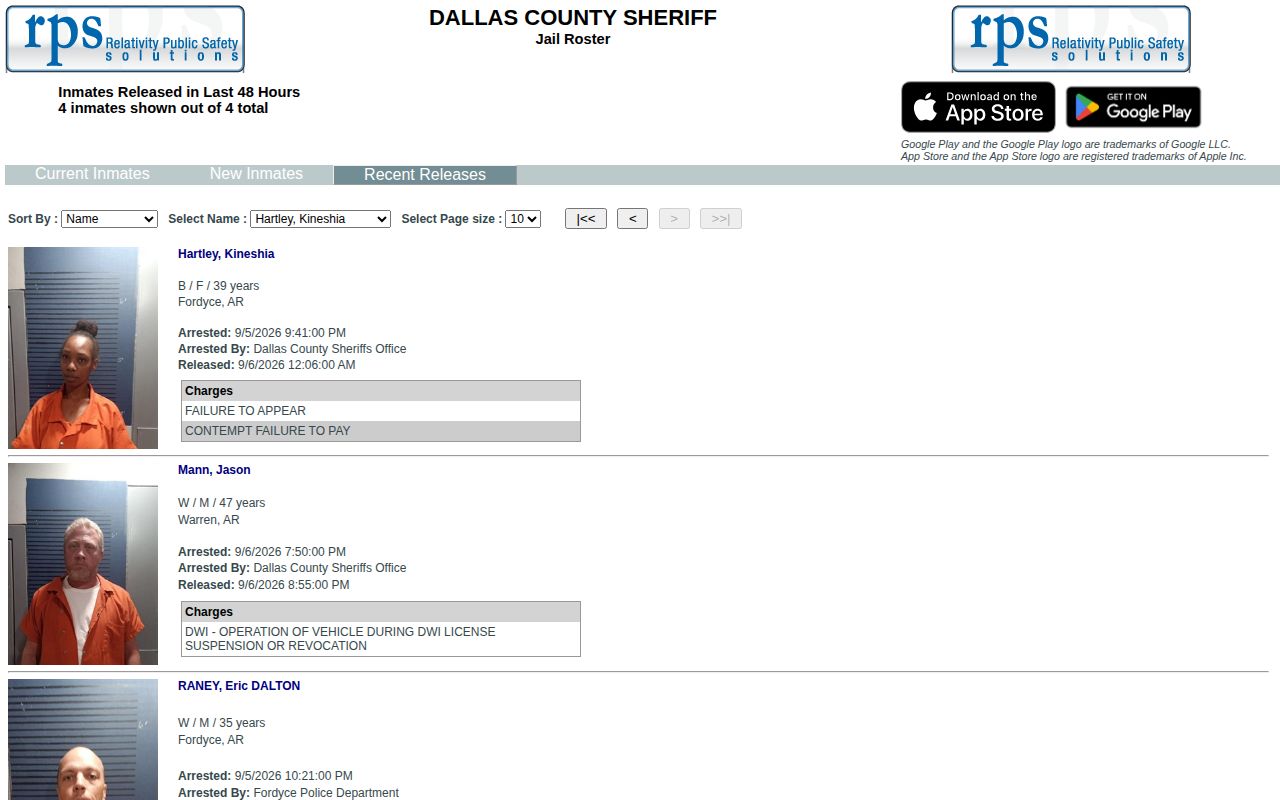
The roster's release window is temporary. It closes, even while the booking record and court case live on in other systems. A sensible order keeps each source in its lane. Start with the roster for intake. Move to VINE for event alerts, then CourtConnect for the disposition, and turn to the ADC only once state custody matters. Write down where you looked and when. That habit keeps a later status from getting read backward into an earlier arrest report.
Custody Status Is Not Guilt
A VINE match is a status update, nothing more. It reflects a custody, supervision, or court event as the reporting agency entered it. The court file is where the full story develops. Cases shift after booking through bond, transfer, plea, or dismissal. Treat a name-only alert with caution. Common names collide in a county this size. Compare the identifiers each time the system sends a change notice. If a record looks wrong, contact the agency that supplied it. Corrections come from that office. They do not come from an unrelated publisher.
Public Record Search
Sponsored Results